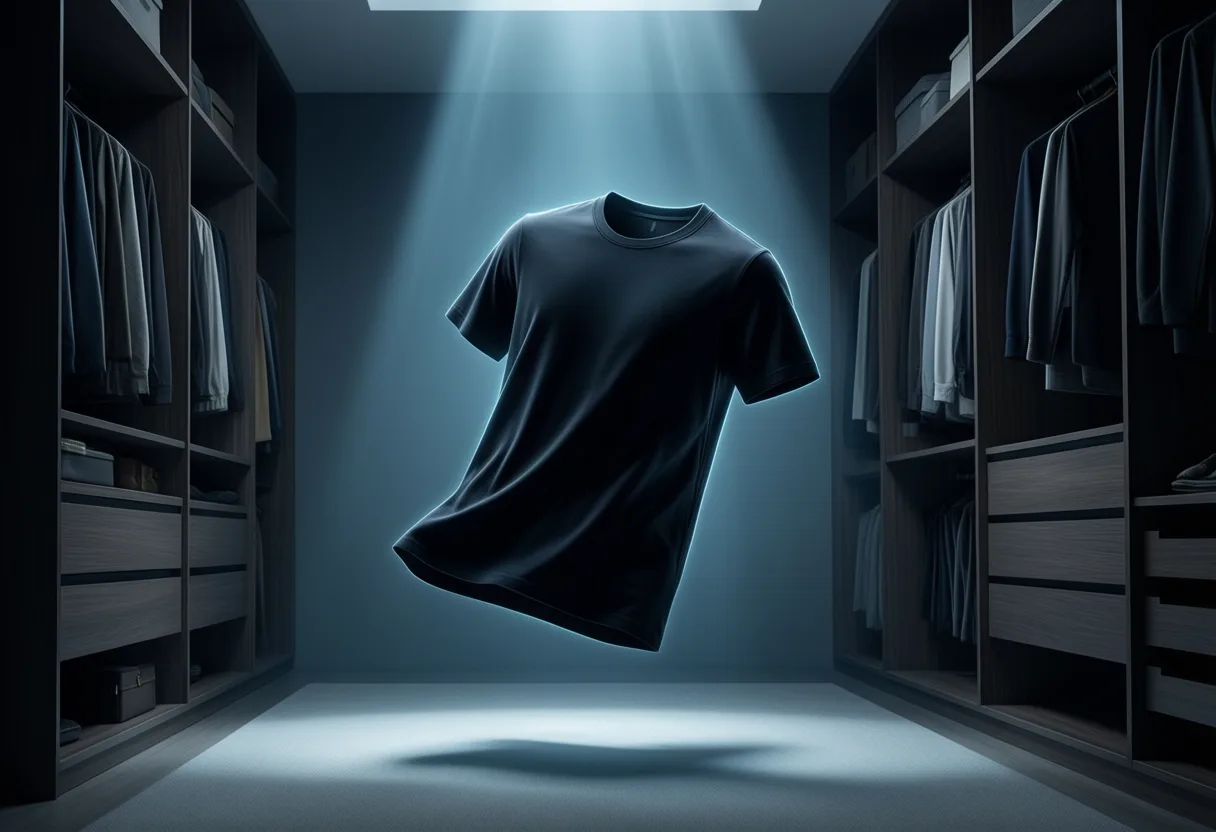
It sits quietly in the drawer, rarely the star of a post or the centerpiece of an outfit. But when you pull it on, everything clicks-your shoulders relax, your stride smooths out, and you feel ready.
That’s the power of a well-made black t-shirt. Not flashy, not loud, but built so thoughtfully that it disappears into your life while elevating every moment.
What Makes a Black T-Shirt Truly Great?
A great black t-shirt doesn’t shout its value. It reveals itself slowly-in how it drapes over your frame, how it survives wash after wash, and how it pairs just as easily with jeans as it does under a blazer.
What separates the ordinary from the exceptional isn’t branding or price tag-it’s intention. Every decision, from thread thickness to stitching tension, shapes how the shirt behaves when you’re moving through your day.
Most people don’t notice the details until something goes wrong: a neckline that sags after two months, sleeves that ride up during a meeting, fabric that pills after one spin in the washer.
But those who wear their clothes hard-commuters, creatives, parents, professionals-know the cost of cutting corners. A flimsy tee means constant replacement, wasted time, and Wardrobe fatigue.
When you break it down, the true measure of greatness is Consistency over time. Does it look good on day one? Sure. But does it still hold up on day fifty?
- It keeps its shape without stiffness
- It resists fading even after repeated laundering
- It feels broken-in from the start, not stiff or scratchy
This isn’t magic. It’s design aligned with real-life use.
The Hidden Science of Softness and Durability
Softness isn’t just about touch-it’s chemistry, fiber structure, and how threads are spun and treated before they become fabric.
Long-staple cotton fibers, for example, create smoother yarns with fewer loose ends, which means less friction against your skin and fewer opportunities for pilling.
Tightly twisted yarns add strength without sacrificing flexibility, allowing the fabric to stretch slightly with movement and snap back into place.
Durability, meanwhile, isn’t only about surviving the laundry-it’s about resisting the slow creep of Wear: collar distortion, seam slippage, and color degradation.
The best versions balance softness and resilience by using methods like ring-spun processing, where fibers are combed and spun to increase strength and smoothness.
Think of it like building a bridge: each thread supports the others, distributing stress evenly across the garment instead of letting weak points form.
Over time, this engineering pays off. While cheaper tees degrade quickly-losing shape, developing holes, or turning gray-a well-constructed shirt ages gracefully.
- Retains depth of color longer
- Feels softer with each wash, not rougher
- Resists surface abrasion from bags, seatbelts, and daily contact
It’s not indestructible, but it’s dependable-the kind of piece that earns trust through repetition.
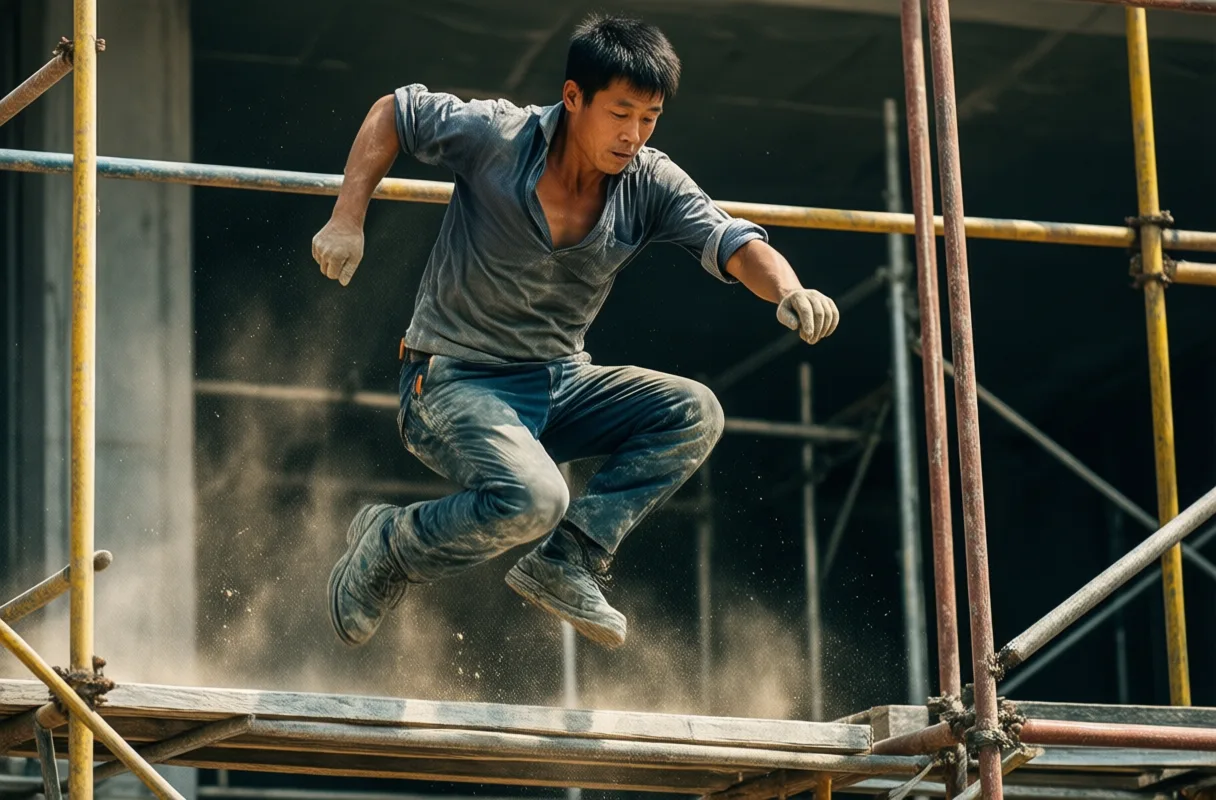
Why Fit Matters More Than You Think
Fit isn’t vanity. It’s function. A poorly fitting t-shirt distracts you with constant adjustments-tugging at the hem, hitching up sleeves, or worrying about clinging fabric.
A well-fitted shirt eliminates those micro-interruptions, letting you focus on your work, your conversation, or your commute.
Too tight, and you’re restricted. Too loose, and you look sloppy-even if the rest of your outfit is sharp.
The ideal fit follows the natural lines of your body without hugging too closely or hanging too far away.
For most builds, this means:
- Shoulders ending right at the edge of your arm joint
- Sleeves that cover the bicep without riding up
- A torso that skims the body, not ballooning or compressing
This balance creates what designers call “quiet confidence”-a look that says you didn’t spend time thinking about it because it just works.
And because bodies aren’t static-breathing, bending, reaching-the shirt must allow room for motion without losing structure.
That’s why some of the best designs include subtle tapering or side seams: small gestures that honor movement while preserving silhouette.
How Fabric Weight Influences Comfort All Day
Fabric weight-measured in ounces per square yard or grams per square meter-shapes how a t-shirt performs in different environments.
Lightweight shirts breathe well and layer easily but may lack substance, becoming see-through or flimsy under stress.
Heavyweight fabrics feel substantial and block wind better but can trap heat, making them uncomfortable in warm rooms or humid climates.
Midweight fabric-typically between 5.5 and 7 ounces-strikes the sweet spot for year-round wear.
It has enough body to drape cleanly, resist wrinkles, and maintain opacity, yet remains breathable during active days.
Consider your routine: sitting in meetings, walking between appointments, stepping outside for fresh air. Your shirt should adapt, not fight you.
- Light (4–5 oz): best for layering or hot weather
- Mid (5.5–7 oz): versatile for most conditions
- Heavy (7+ oz): structured feel, cooler temps
The midweight option often wins because it’s adaptable-like a utility player who excels in any position.
And unlike Trend-driven styles, this choice isn’t about fashion cycles. It’s about physics meeting practicality.
The Sleeves, The Neckline, The Shoulder Stitch: Micro-Details That Define Quality
Zoom in close, and the difference between a $15 tee and a $40 one becomes clear-not in logo size, but in tiny, deliberate choices.
Take the shoulder seam. On lower-quality shirts, it often falls past the shoulder bone, creating a boxy, ill-fitting silhouette.
Better construction places the seam directly on the shoulder joint, aligning with the body’s natural line and improving overall proportion.
The neckline is another tell. Crew necks tend to stretch out over time, especially with frequent pulling over the head.
Reinforced necklines-using ribbing, double stitching, or a thin strip of elastic thread-help maintain shape wash after wash.
Then there’s the sleeve hem. Raw edges curl. Single stitching unravels. But a clean double-fold stitch lies flat and lasts longer.
These aren’t cosmetic touches-they’re structural reinforcements disguised as details.
Other quality signals include:
- Flatlock seams to reduce chafing
- Coverstitching for stretch-friendly durability
- Pre-shrunk fabric to prevent surprise shrinkage
Each one addresses a failure point common in everyday wear. Together, they create a shirt that endures.
You might not see them at first glance, but you’ll feel them in the long run.

When Simplicity Becomes Versatility-Style Without Effort
A black t-shirt shouldn’t require styling. It should enable it.
Slip it on, and it becomes the foundation for whatever comes next-jeans and sneakers, chinos and boots, or a suit jacket for a last-minute dinner invite.
Its neutrality is its strength. Unlike bold graphics or loud colors, it doesn’t dictate mood-it adapts to yours.
Need to look put-together fast? This is the piece that delivers.
Because it doesn’t compete with the rest of your wardrobe, it lets other elements shine: a textured jacket, colorful shoes, a standout watch.
And in professional settings where dress codes blur-creative offices, hybrid workplaces, client visits-it offers a polished casual option.
Pair it under a blazer, roll the sleeves just right, and you signal competence without rigidity.
More importantly, it reduces decision fatigue. When you know one item works in ten contexts, you stop overthinking the rest.
That mental clarity has economic value: saved time, reduced stress, fewer unnecessary purchases.
In behavioral economics, this is called Reducing transaction costs-not in money, but in energy.
Beyond Cotton: Blends That Perform in Heat, Humidity, and Hustle
Cotton dominates the t-shirt world for good reason: it’s soft, breathable, and biodegradable.
But pure cotton has limits. It absorbs moisture and holds it, leading to dampness in humidity or during physical activity.
Blends address these weaknesses by combining fibers to enhance performance.
Polyester-cotton mixes, for instance, dry faster and resist wrinkling, making them ideal for travel or long days on the move.
Some blends introduce rayon from bamboo or modal for added softness and drape, though these may sacrifice longevity.
Others use a touch of spandex-usually 2% or less-to add four-way stretch, helping the shirt move with the body.
While purists argue that blends compromise natural feel, modern weaving techniques have narrowed the gap.
Today’s smart blends offer:
- Faster drying times
- Improved shape retention
- Slight moisture-wicking properties
They won’t replace cotton entirely, but they expand options for specific needs.
For someone balancing Comfort And performance, a thoughtful blend can be the quiet upgrade that makes a real difference.
Washing It Again (and Again): Longevity Without Losing Shape
How you care for a t-shirt matters as much as how it was made.
Washing in hot water breaks down fibers faster. Drying on high heat shrinks fabric and stiffens seams. Overloading the machine causes unnecessary abrasion.
Cold water washing preserves color and elasticity. Turning the shirt inside out protects the outer surface from friction.
Air drying is ideal, but if you use a dryer, low heat and shorter cycles reduce stress on the material.
Even the way you fold or hang plays a role. Hanging heavy cotton tees can stretch the shoulders over time.
Folding keeps the shape intact, especially for thicker fabrics.
Follow these steps, and a well-made shirt can last years instead of months.
- Wash cold, gentle cycle
- Turn inside out
- Air dry or tumble dry low
- Fold, don’t hang
Longevity isn’t passive. It’s a partnership between product and habit.
And every extra month of wear lowers the cost per use-a metric worth tracking, even if silently.

The Everyday Essential That Works Everywhere-No Outfit Left Behind
There’s no such thing as a universal outfit. But a black t-shirt comes close.
It transitions from gym bag to office floor, from weekend errands to evening drinks, without missing a beat.
It pairs with dark denim for a sleek night look, with khakis for daytime professionalism, with shorts when the sun hits.
Under a leather jacket, it toughens up. Under a cardigan, it softens down.
Even in formal-leaning spaces, it serves as a relaxed anchor-proof that ease and elegance aren’t opposites.
Its power lies in neutrality. Like a blank canvas, it accepts whatever context you place it in.
No need to coordinate colors or themes. Just pull it on, and it integrates.
This kind of versatility doesn’t happen by accident. It’s the result of careful design choices converging into one silent performer.
And because it works everywhere, you wear it more-which means you buy less.
In a consumer economy driven by churn, that’s a quiet rebellion.
Where Minimalism Meets Maximum Wear: Building Around One Perfect Shirt
Minimalism isn’t about owning nothing. It’s about owning what matters-and wearing it often.
A single high-quality black t-shirt can become the core of a capsule wardrobe, reducing clutter and simplifying choices.
Build around it: two pairs of pants, three outer layers, a few accessories. Suddenly, you have dozens of combinations.
Each new piece doesn’t stand alone-it connects, multiplies, enhances.
This approach mirrors portfolio diversification: a strong base asset allows for strategic additions without excess.
You’re not limiting style-you’re focusing it.
And because you’re wearing the same core pieces repeatedly, quality becomes non-negotiable.
Cheap materials fray. Poor fits nag. Bad colors clash. They force constant replacement.
But a durable, well-fitting black t-shirt compounds its value every time you wear it.
Over time, it pays dividends in time saved, money preserved, and confidence earned.
Final Thoughts: Why the Best One Feels Like It Was Made for You
At its core, clothing is problem-solving. It protects, expresses, and enables.
The best black t shirt succeeds because it solves multiple problems at once: comfort, durability, versatility, and style.
It doesn’t demand attention. It earns loyalty.
And when you find one that fits right, feels right, and lasts-something shifts.
It stops being just another item in your closet and becomes part of your rhythm.
Like a favorite pen, a trusted wallet, or a reliable car, it fades into the background not because it’s forgettable, but because it’s flawless.
In a world of noise and novelty, that kind of quiet excellence is rare-and worth recognizing.
Why the Black T-Shirt Stands the Test of Time
A Wardrobe Staple with Surprising Roots
The black T-shirt wasn’t always the go-to symbol of cool. It started as an undergarment, issued to U.S. Navy sailors in the early 20th century for practicality and durability. When World War II veterans returned home, they kept wearing them-rolled up sleeves, tucked or untucked-bringing the look into everyday civilian life. Hollywood played a big role too: Marlon Brando’s brooding look in A Streetcar Named Desire And James Dean in Rebel Without a Cause Turned the simple black tee into a quiet act of rebellion. It wasn’t about loud statements; it was about attitude, worn close to the skin.
More Than Just a Color
Black absorbs light, which is why it feels warmer in the sun-but that same quality gives it a slimming effect and makes it incredibly versatile. A well-fitting black T-shirt can shift roles seamlessly: pair it with jeans for a casual look, layer it under a blazer for smart-casual ease, or wear it under a flannel for laid-back warmth. Because it doesn’t compete with other colors or patterns, it acts like a visual anchor in any outfit. And unlike white tees, it hides minor stains and wear a little longer, making it a low-maintenance favorite for daily wear.
The Fabric Factor
Cotton reigns supreme for comfort, especially when it’s ring-spun or combed, which removes impurities and makes the fibers softer and stronger. Some of the most comfortable black tees use a blend that includes a touch of elastane or polyester, helping them keep their shape after repeated washes. Over time, a good black cotton tee molds to the body, creating a personal fit that feels broken-in but never sloppy. And while dyeing cotton black uses more pigment, high-quality versions resist fading, so that rich, deep color lasts wash after wash.
Frequently Asked Questions
What makes a black t-shirt truly great?
A great black t-shirt is defined by consistent performance over time-it keeps its shape, resists fading, and feels soft from the start. It’s built with intentional design choices in fabric, fit, and construction that support daily wear.
Why does fabric weight matter in a t-shirt?
Fabric weight affects comfort and versatility. Midweight fabric (5.5–7 oz) offers the best balance for year-round wear-durable enough to hold its shape yet breathable for active days.
How can I make my black t-shirt last longer?
Wash it in cold water on a gentle cycle, turn it inside out to protect the surface, air dry or use low heat, and fold instead of hang to preserve the shape over time.
What are the key details that define a high-quality t-shirt?
Quality signs include a shoulder seam aligned with the joint, reinforced neckline to prevent stretching, double-fold sleeve hems, flatlock seams, coverstitching, and pre-shrunk fabric for lasting fit.
Not financial advice. This article is general information, not financial, investment, tax or legal advice. Talk to a qualified professional before making money decisions.
This article was produced with AI assistance. How Money Maker Magazine uses AI.
Diego explores the intersection of culture and commerce, reporting on how trends in travel, fashion, and dining shape consumer behavior and investment opportunities. His work reveals the economic engines behind everyday indulgences.