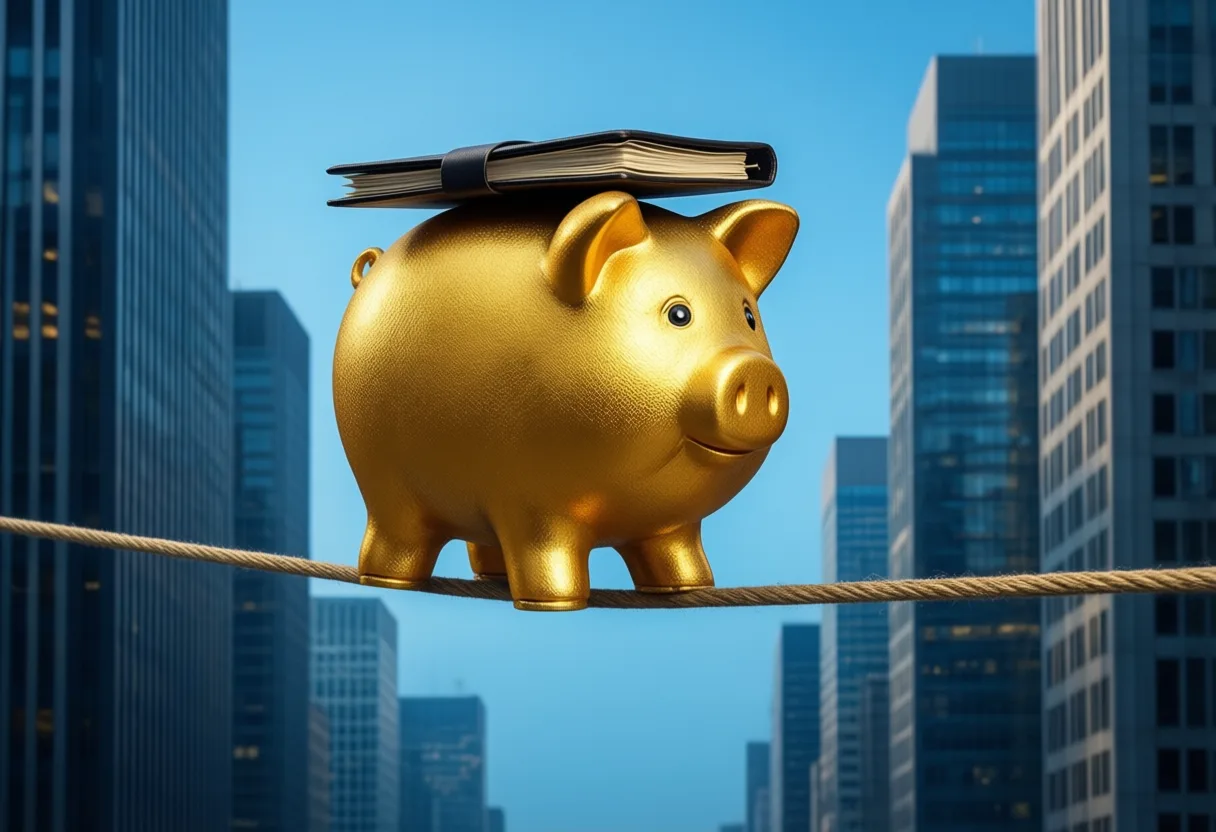
The market tumbles. Headlines flash. Your stomach knots. But across town, someone quietly Buys $200 of stock-same day, same amount, like clockwork. No drama. No second-guessing. Just consistency.
That’s not luck. It’s not genius. It’s an Investment strategy Dollar cost averaging, and it’s how regular people build quiet, lasting wealth.
Why Timing the Market Is a Trap
Wall Street loves a crisis. Panic means clicks. Clicks mean cash. But for Investors, noise is a tax on judgment. The idea that you can predict the perfect moment to jump in is seductive-but rarely real.
Even professionals struggle to time the market consistently. One month you’re up. The next, a global event shifts everything. Trying to outsmart the chaos often means missing the recovery entirely.
Most people buy high because that’s when confidence peaks. They sell low because fear takes over. It’s not a flaw-it’s human nature. And human nature is expensive in the markets.
The truth? No one rings a bell at the bottom. No flashing sign says “Buy here.” Waiting for perfect clarity means waiting forever.
How Consistent Investing Outperforms Emotional Decisions
Imagine two investors: One waits, watching for the “right” moment. The other sets up an automatic transfer every month-rain or shine, bull or bear.
Over time, the second investor builds more than wealth. They build discipline. They buy shares when prices are low, and fewer when prices are high. No emotion. No headlines. Just steady action.
This isn’t magic. It’s math meeting momentum. When you invest the same amount regularly, you naturally buy more shares when prices drop and fewer when they rise. That smooths out the bumps.
- Emotion drives impulsive trades.
- Consistency drives compound growth.
- Discipline beats drama every time.
The investor who waits for clarity often ends up waiting too long. The one who acts-regardless of noise-ends up ahead.

What Happens When You Invest $200 Every Month for 20 Years
Let’s say you set aside $200 a month. Every paycheck, like paying a quiet tribute to your future. You do this for 20 years-through job changes, market swings, even recessions.
That’s $48,000 invested over time. But because of compounding Returns, the final number could be much higher. The growth isn’t linear-it accelerates.
Early deposits have decades to grow. They earn returns. Those returns earn returns. The longer the clock runs, the more powerful the effect.
You don’t need to pick winners. You don’t need to forecast. You just need to show up. The math does the rest.
The Real Power of Small, Regular Purchases Over Time
You don’t need thousands to start. You need consistency. A latte skipped here, a streaming subscription canceled there-that’s $200 a month.
Think of it like watering a plant. One cup won’t make a tree. But every day, without fail? That’s how roots grow deep.
Small, regular purchases mean you’re always participating. You’re never “on the sidelines,” waiting to feel brave.
- $50 a week becomes $2,600 a year.
- $100 a week becomes $5,200.
- Over decades, these numbers multiply.
You’re not betting on a single moment. You’re building a habit that compounds into something substantial.
Why Volatility Works in Your Favor With This Strategy
Most people fear market swings. But if you’re Investing Regularly, dips are opportunities-not disasters.
When prices drop, your fixed monthly amount buys more shares. That’s the hidden edge. You accumulate more at lower prices.
Then, when the market recovers, you own more of the rebound. Volatility becomes your silent partner.
It’s not about avoiding the storm. It’s about learning to sail in all weather. The ship that stays in port never sinks-but it never reaches new shores.
Avoiding the Pitfall of Waiting for the “Perfect” Moment
Waiting for the perfect entry point is like waiting for the sun to shine before leaving the house. Some days, it never happens.
Markets don’t wait for confidence. They move while you hesitate. And hesitation costs more than losses-it costs time.
Time is the one thing you can’t recover. The earlier you start, even with less, the more your money can grow.
Every month delayed is a month of compounding left on the table. The perfect moment is usually just the moment you finally act.

Three Simple Steps to Automate Your Investment Growth
You don’t need to be a trader. You don’t need to watch charts. You need a plan that runs without you.
- Set a fixed amount - Decide how much you can invest monthly without stress.
- Choose a low-cost fund - Pick one with broad exposure, like an index fund.
- Automate the transfer - Schedule it like a bill. Out of sight, into growth.
Once it’s automatic, you’re no longer relying on willpower. You’re relying on systems.
Miss one payment? No crisis. Just restart. The goal isn’t perfection. It’s persistence.
When Life Gets in the Way-How Steady Investing Keeps You on Track
Jobs change. Kids arrive. Emergencies happen. Life doesn’t pause for your investment plan.
But consistency doesn’t mean never missing a payment. It means returning to the rhythm.
Even if you scale back during tough months, staying connected matters. A smaller amount is better than zero.
The key is not to abandon the strategy when stress hits. It’s to adapt without quitting.
How to Adjust Your Plan Without Abandoning the Strategy
Got a raise? Increase your monthly amount. Life slows down? Scale back temporarily.
This isn’t rigid. It’s resilient. The core idea-regular investing-stays the same.
You can change the amount. You can shift the fund. But don’t stop the habit.
Wealth isn’t built in a sprint. It’s built in steps, adjusted as you go.

What Long-Term Wealth Looks Like Without Big Risks
You won’t make headlines. You won’t be on the cover of a finance magazine.
But you’ll have choices. Options. A cushion. Maybe early retirement. Maybe the freedom to take a risk on a dream.
Long-term wealth isn’t flashy. It’s quiet. It’s peace of mind when others are panicking.
It’s knowing your money is working, even when you’re not thinking about it.
Staying the Course When Markets Panic and Headlines Scream
When the market drops 10%, the news screams crisis. But your automatic deposit doesn’t flinch.
That’s when your strategy shines. While others flee, you’re quietly buying more at lower prices.
It feels backward. That’s why most people don’t do it. But doing what feels wrong-correctly-is how you win.
Stay the course. The headlines will fade. Your portfolio will keep growing.
The Quiet Path to Financial Confidence
No one rings a bell when you’ve built something real. No ticker tape. No applause.
But one day, you check your account and realize: you’re on solid ground. You didn’t get lucky. You stayed consistent.
You didn’t need to predict. You just needed to persist.
That’s the quiet power of regular investing. It doesn’t shout. But over time, it speaks volumes.
Smoothing the Ride to Wealth
The Birth of a Brilliant Idea
Dollar cost averaging isn’t some modern fintech invention-it’s been around longer than most people think. The strategy gained real traction during the Great Depression, when regular, small investments became one of the few feasible ways for average workers to participate in the stock market. Back then, volatility scared off many, but those who kept buying shares at whatever price helped lay the foundation for long-term wealth, even when markets were in freefall. It turned consistency into a quiet superpower.
How Math Works in Your Favor
Here’s the fun part: dollar cost averaging turns market swings to your advantage without you having to predict a single price. When prices dip, your fixed dollar amount buys more shares. When prices rise, it buys fewer. Over time, this naturally lowers your average cost per share-no timing skills required. Think of it like buying groceries: sometimes you get more pasta for $5, sometimes less, but over a year, your average price evens out. The same principle applies, just with stocks instead of spaghetti.
A Strategy That Sticks
One reason dollar cost averaging works so well over decades is behavioral. It removes the emotional rollercoaster of trying to “buy low, sell high.” Investors who automate their contributions are far more likely to stay the course during downturns, which is exactly when long-term gains are quietly being planted. The real magic isn’t in beating the market-it’s in staying in it, steadily, year after year, letting time and compounding do the heavy lifting. Explore more stories, videos, and creators on Loaded.
Frequently Asked Questions
What is dollar cost averaging?
Dollar cost averaging is an investment strategy where you invest the same amount of money at regular intervals, regardless of market conditions. This approach buys more shares when prices are low and fewer when prices are high.
How does dollar cost averaging help in volatile markets?
In volatile markets, dollar cost averaging allows you to buy more shares when prices drop, lowering your average cost per share over time. Volatility becomes an advantage, not a risk.
What happens if I invest $200 every month for 20 years?
Investing $200 monthly for 20 years totals $48,000 invested. Thanks to compounding returns, the final value can be significantly higher, with early contributions having decades to grow.
Can I adjust my dollar cost averaging plan during life changes?
Yes, you can increase, decrease, or temporarily pause contributions based on life circumstances. The key is to maintain the habit and return to regular investing as soon as possible.
Not financial advice. This article is general information, not financial, investment, tax or legal advice. Talk to a qualified professional before making money decisions.
This article was produced with AI assistance. How Money Maker Magazine uses AI.
Diego explores the intersection of culture and commerce, reporting on how trends in travel, fashion, and dining shape consumer behavior and investment opportunities. His work reveals the economic engines behind everyday indulgences.